Meishan feeder pigs · Cunningham, Tennessee
Raise your own heritage pork
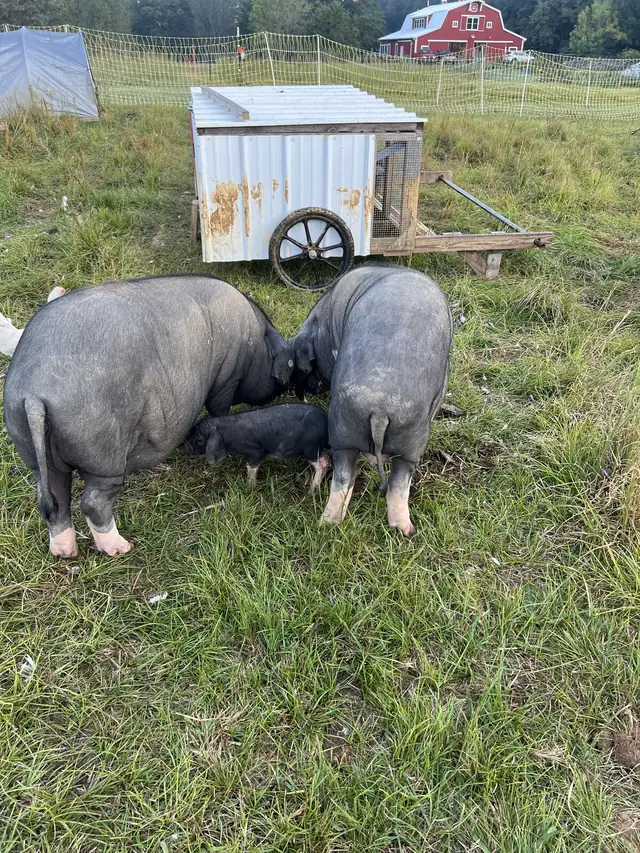
We sell weaned Meishan feeder pigs from our own herd. They are calm, they forage, and they do well for someone raising a pig for the first time. $250 each under 12 weeks.
Taking orders. From the litter born August 24, ready to go home now. Five left: four barrows and one gilt. $250 each while they are under 12 weeks, which runs through November 16.
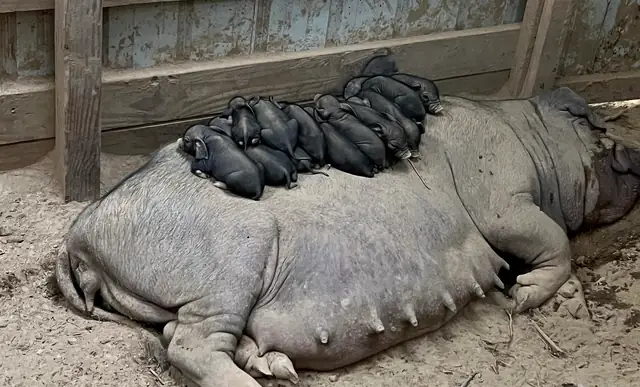
Litter of 9: 6 barrows and 3 gilts. 5 still available.
A $50 deposit holds your pig. Refundable up to a week before pickup, or we move it to the next litter if you would rather wait. If we cannot deliver the pig, you get it back in full.
Pickup is at the farm in Cunningham, Tennessee, about 20 minutes from Clarksville and an easy drive from Dover, Fort Campbell, and the nearby Kentucky counties.
Updated October 23, 2026
Tell us how many pigs you want, barrows or gilts, and when you could pick up.
The whole relationship
From “Is this right?” to “I need help.”
Choose the stage you are actually in. The selected stage opens its guide immediately below. Nothing is tracked or stored.
Route map, not order tracker. It records nothing, reserves nothing, and does not replace confirmation from the farm.
The decision in plain terms
A calm pig, a slower finish, and a real daily commitment.
These are the facts most likely to change your answer. Open the deeper guide only where you need it.
- Price now
- $250
- under 12 weeks
- Finish
- 9–12 months
- slower than commercial pigs
- Daily need
- Feed + water
- with secure containment
- Pickup
- On farm
- Cunningham, Tennessee
The Meishan Fit Room
Try the breed on before taking one home.
Choose the reason that attracts you. We will show both the fit and the cost of that choice.
Fit, with the tradeoff visible
A calmer pig can fit a small farm well.
Why it can fit
We chose Meishans partly for their calm temperament and usefulness in a woodland system. That can make routine handling more approachable for a first-time owner.
What it asks of you
Calm does not mean effortless. A pig still needs secure containment, daily observation, feed, water, shelter, and respectful handling.
A good fit is allowed to include a real downside.
Fit, with the tradeoff visible
This is slow food, not fast turnover.
Why it can fit
A longer finish gives a household time to learn the animal and plan processing rather than forcing a commercial production schedule.
What it asks of you
Meishans finish more slowly than commercial hogs. More months mean more daily chores, feed, fencing exposure, and opportunities for plans to change.
A good fit is allowed to include a real downside.
Fit, with the tradeoff visible
Expect fat, flavor, and a different carcass.
Why it can fit
Meishans are a lard breed. Our recorded animals produced substantial fat alongside packaged pork, which matters to households that value cooking fat and richer meat.
What it asks of you
They dress lighter than a commercial hog and are not the right choice if your goal is maximum lean meat or a familiar supermarket-style carcass.
A good fit is allowed to include a real downside.
Fit, with the tradeoff visible
Forage complements care; it does not replace it.
Why it can fit
The breed fits our fenced woodland paddocks, where pigs forage and groups move between resting areas.
What it asks of you
Pasture is not a complete feeding plan. Our pigs still receive measured feed twice a day, and fencing must remain reliable even when forage is abundant.
A good fit is allowed to include a real downside.
The season window
Choose the honest timing, not the fastest timing.
The current litter is ready now. That does not mean your farm must be. Choose the timing that matches the system you actually have.
Timing decision
This litter is already in its pickup window.
5 feeder pigs remain from the litter born August 24. They have been ready since the week of October 19.
This timing assumes
- Containment is complete
- Shelter, feed, and water are ready
- Transport and pickup can happen soon
Timing decision
Use this litter as a planning deadline, not pressure.
A pig should not arrive before the system is ready. Walk through the first year, identify the missing pieces, and ask about a later litter if this window is too soon.
This timing assumes
- Build and test fencing first
- Plan the daily feed and water routine
- Identify a lawful processing path early
Timing decision
Waiting can be the responsible decision.
The farm does not publish an unconfirmed future birth date. Join the litter list and we will contact you when another litter is real, not merely projected.
This timing assumes
- Choose the next-litter interest
- Leave one way to reach you
- Keep preparing without a promised date
Before the message
Ready for a feeder pig?
The purchase is the easy part. Check anything you still need help planning before a pig comes home. Leave it unchecked if that piece is already handled. Your answers stay in this browser and are not saved.
We assume you are ready unless you tell us otherwise. This is a planning aid, not a test, and it never blocks you from contacting us.
No help topics selected
Your basic plan is in place.
If that is right, build a pickup request. Check any topic above if you want us to help plan it first.
Build your pickup request
Start with the useful details.
Choose a quantity and preference. We will still confirm availability and answer questions before any deposit.
Why buy from us
What $250 gets you
From a registered herd
We are a registered breeder with the American Meishan Breeders Association. You are buying a Meishan, not a pig that looks like one.
Barrows, not boars
Our males are castrated as young piglets. Every male in this litter was done on September 5. You will not be dealing with a boar.
Weaned before they leave
Pigs go home weaned and eating on their own, at about eight weeks. Gilts are kept away from boars before then.
Questions after the sale
Message us any time after you take your pig home. Fencing, feed, a pig that will not eat: ask.
Honest numbers
Below are the real weights from hogs we raised ourselves, including the ones that did not flatter us.
The list
Not ready for a pig this time?
Leave a way to reach you and we will tell you when the next litter is born. That is all we use it for.
No newsletter · only selected updates
First Year Fieldbook
See the commitment before you buy the pig.
Walk through four real stages of raising a feeder pig. This is an expectation-setting guide, not a promise that every animal follows the same calendar.
Before pickup
Chapter 1 of 4
Build the place before bringing home the pig.
Secure fencing, shelter, feed, water, and transport come first. A dog crate or livestock crate works for pickup. The pig should arrive to a finished setup, not a project still underway.
What matters now
Containment · shelter · feed · water · crate
First days
Chapter 2 of 4
Watch eating, drinking, and the fence line.
The first job is observation. Confirm the pig eats, drinks, settles, and cannot find an easy exit. Questions about appetite, behavior, feed, or fencing belong in one clear message to the farm.
What matters now
Appetite · water · behavior · weak fence points
Growing months
Chapter 3 of 4
Manage condition, not just the calendar.
Meishans grow more slowly than commercial hogs and put on fat easily. Our mature pigs receive about 3 pounds of feed per day measured dry before soaking; young pigs receive less. Watch body condition and adjust.
What matters now
Daily care · body condition · reliable containment
Around 9–12 months
Chapter 4 of 4
Finish with realistic breed expectations.
Plan on roughly nine to twelve months. Meishans are a lard breed, so expect more fat and a lower dressing percentage than a commercial hog. Our two recorded hogs produced 109 and 125 pounds of packaged pork.
What matters now
Finish plan · processing route · freezer space
Owner field guide
Open only what you need.
Breed tradeoffs, feeding practice, our harvest records, and buyer questions are still here without making everyone walk through every detail.
Why a Meishan?
Commercial breeds were selected for lean meat and fast growth. Meishans went the other way: more fat in the meat, useful foraging ability, and a calm temperament.
The tradeoff is time and size. They finish slower, dress lighter, and produce substantial lard. Read the breed evidence →
How do we feed ours?
Our pigs eat fermented feed twice a day in addition to what they forage. A grown pig gets about 3 pounds dry weight a day before soaking; young pigs get less.
Meishans put on fat easily. Watch body condition and reduce feed if needed. Our pigs also move through fenced woodland paddocks every two to three weeks.
What did our own hogs yield?
Two Meishans processed here in June 2026: 362 lb live yielded 109 lb packaged; 338 lb live yielded 125 lb packaged. Dressing percentages were 50% and 60%, below a commercial hog because these are lard-breed animals.
See the complete weights and cost breakdown →Common buyer questions
- How old are they when they go home?
- Weaned, at about eight weeks. The litter born August 24 is ready the week of October 19.
- How do I hold a pig?
- Message us with how many you want and barrow or gilt. A $50 deposit holds your pig. Refundable up to a week before pickup, or we move it to the next litter if you would rather wait. If we cannot deliver the pig, you get it back in full.
- What do they cost?
- $250 each while they are under 12 weeks. After that they are priced by age.
- Where do I pick up?
- Pickup is at the farm in Cunningham, Tennessee, about 20 minutes from Clarksville and an easy drive from Dover, Fort Campbell, and the nearby Kentucky counties.
- Barrow or gilt?
- This litter has 6 barrows (castrated males) and 3 gilts. Tell us which you want. If you are raising one for the freezer, either works. If you might want to breed later, ask for a gilt.
- How long until they finish?
- Plan on nine to twelve months. Meishans grow slower than commercial pigs. That is the tradeoff for the meat.
- Are they fat?
- Yes. Meishans are a lard breed, and you will get a lot of fat on the carcass. Render it. Good lard is half the reason people raise them.
- What should I bring?
- A dog crate or a livestock crate. Message us first and we will set the time and the handoff.
First 72 Hours Card
Bring home a routine, not just a pig.
Build a private arrival checklist before pickup. Progress stays only in this browser and can be cleared at any time.
This is a preparation tool, not a health record or diagnostic checklist. A sick or rapidly worsening animal needs veterinary care.
Arrival readiness
Start with the essentials.
Progress
0 / 6
Next useful move
Check the setup before pickup day.
The goal is not a perfect score. It is noticing the missing piece while there is still time to fix it.
No progress saved.

Registered breeder
American Meishan Breeders Association
On-farm pickup
Check the drive to Cunningham.
Plan against the town now. We send the private gate address after the item and pickup time are confirmed.
After pickup
Pig help desk
Start with one simple message. If the concern is hard to explain, add direct observations before you send it.
This organizes husbandry information. It does not diagnose illness or replace a veterinarian.
Do not wait on a Facebook reply for an emergency.
If the pig is struggling to breathe, cannot stand, has severe bleeding, appears dangerously overheated, or is rapidly worsening, contact a veterinarian or emergency veterinary service now. Move it to a safe, quiet place with access to water if that can be done safely.
Add detail for a complicated concern (optional)
Direct observations help separate what happened from what you think it might mean. Leave these blank for an ordinary question.
The Breeder Listening Room
Hear the breed experts. Keep the boundaries visible.
Selected ideas from The Meishan Edge are paired with what this farm actually does and what the source cannot establish.
Source · Practice · Boundary
Do not mistake future forage ability for permission to underfeed a piglet.
- What AMBA breeders discuss
- In “Meishan Magic — The 150 Pound Rule,” AMBA breeders discuss young pigs as the stage where adequate, balanced nutrition gives the best feed conversion and where underfeeding can compromise growth efficiency.
- What we do here
- Our baseline remains simple: young pigs receive less than a mature pig, but pasture does not replace a complete grower ration. Ask us what the pig is eating before pickup and make feed changes gradually.
- The boundary
- The episode presents breeder experience and an emerging rule of thumb, not a veterinary prescription or a ration for every farm.
Source · Practice · Boundary
A Meishan’s useful fiber capacity develops; it is not unlimited from weaning.
- What AMBA breeders discuss
- The same episode distinguishes younger pigs from older animals whose fiber digestion and forage use become more important as feed efficiency changes.
- What we do here
- That supports our existing distinction between the first months and the later finishing period. We still provide measured feed and watch the animals and pasture rather than assuming woodland forage is a complete diet.
- The boundary
- Pasture quality, genetics, age, season, and management differ. The website does not convert this discussion into a universal fiber percentage or feeding formula.
Source · Practice · Boundary
Two feeds with the same headline percentage may not be the same ration.
- What AMBA breeders discuss
- In “Feeding the Meishan,” AMBA breeders discuss ingredients, protein, fat, fiber, minerals, probiotics, and the need to read the complete feed tag rather than relying on one number.
- What we do here
- For a new owner, the safest handoff is continuity: know the current feed, obtain the label, and avoid an abrupt switch. Questions about a specific ration belong with the breeder, feed professional, or veterinarian.
- The boundary
- The podcast includes individual farm formulas and alternatives. Those examples are not copied here as instructions for a different pig, feed source, or property.
Source · Practice · Boundary
The animal and the pasture still have to be observed.
- What AMBA breeders discuss
- The 150 Pound Rule episode repeatedly returns to watching appetite, response to supplemental feed, pasture condition, season, and body condition instead of treating a guideline as an automatic answer.
- What we do here
- That is why the First 72 Hours Card asks someone to know what normal eating and behavior look like, and why the Pig Help Desk structures observations rather than diagnosing the pig.
- The boundary
- Observation helps identify change. It does not replace weighing, professional ration advice, or veterinary care when an animal is ill or worsening.