Heritage Pig
Meishan
- Role
- Forest-raised feeder pigs and developing breeding stock.
- Character
- Extremely docile, slow-finished, and deeply marbled.
- Why preserve
- A critically rare agricultural genetic resource suited to forage-rich, low-stress systems.
Our Story
Swift Spring Hollow is a family farm in Cunningham, Tennessee. The farm is how our family answers a plain question: where does our food come from, and can we show the work behind it?

The family’s perspective
Robert is a practicing family physician, but this is a family farm rather than a medical project. His work reinforces a simple habit shared across the farm: observe carefully, keep records, state limits, and change course when reality disagrees.
We have farmed here since 2014. Calm Meishan pigs fit our woodland paddocks; our daughter and son-in-law chose rare Silver Fox rabbits. We sell direct, publish real costs, and record what fails as well as what works.
Explore the farm
Start with the question you have. Nothing is removed; this page simply opens one path at a time.
Open the Farm Charter directly →Ask the Farm
No chatbot and no sales script. Choose a question visitors should ask any farm, then inspect the answer and its evidence.
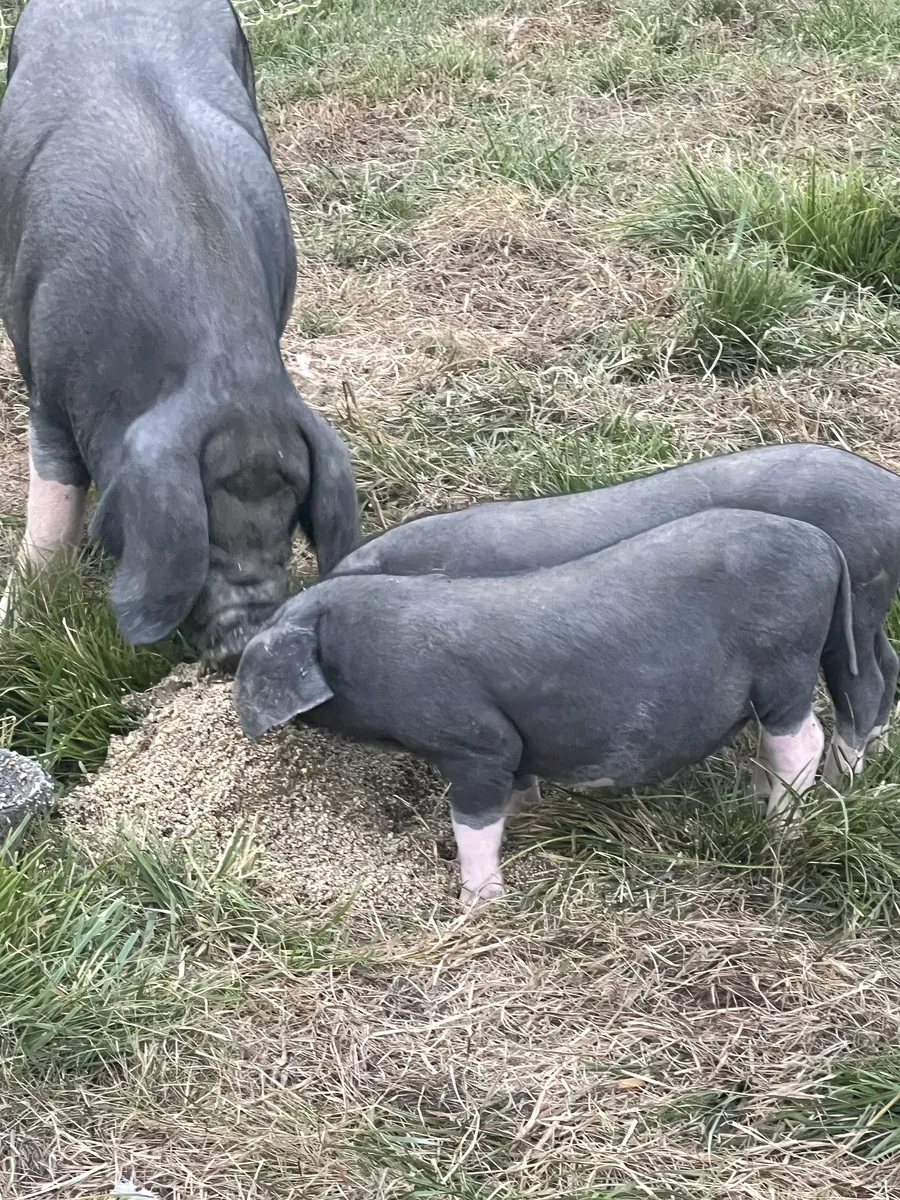
The plain answer
Yes. Our pigs live in fenced woodland paddocks with shade and forage. Groups move to fresh ground every two to three weeks, and used paddocks rest four to six weeks before animals return.
Do not take our word for it
See the rotation and handling system →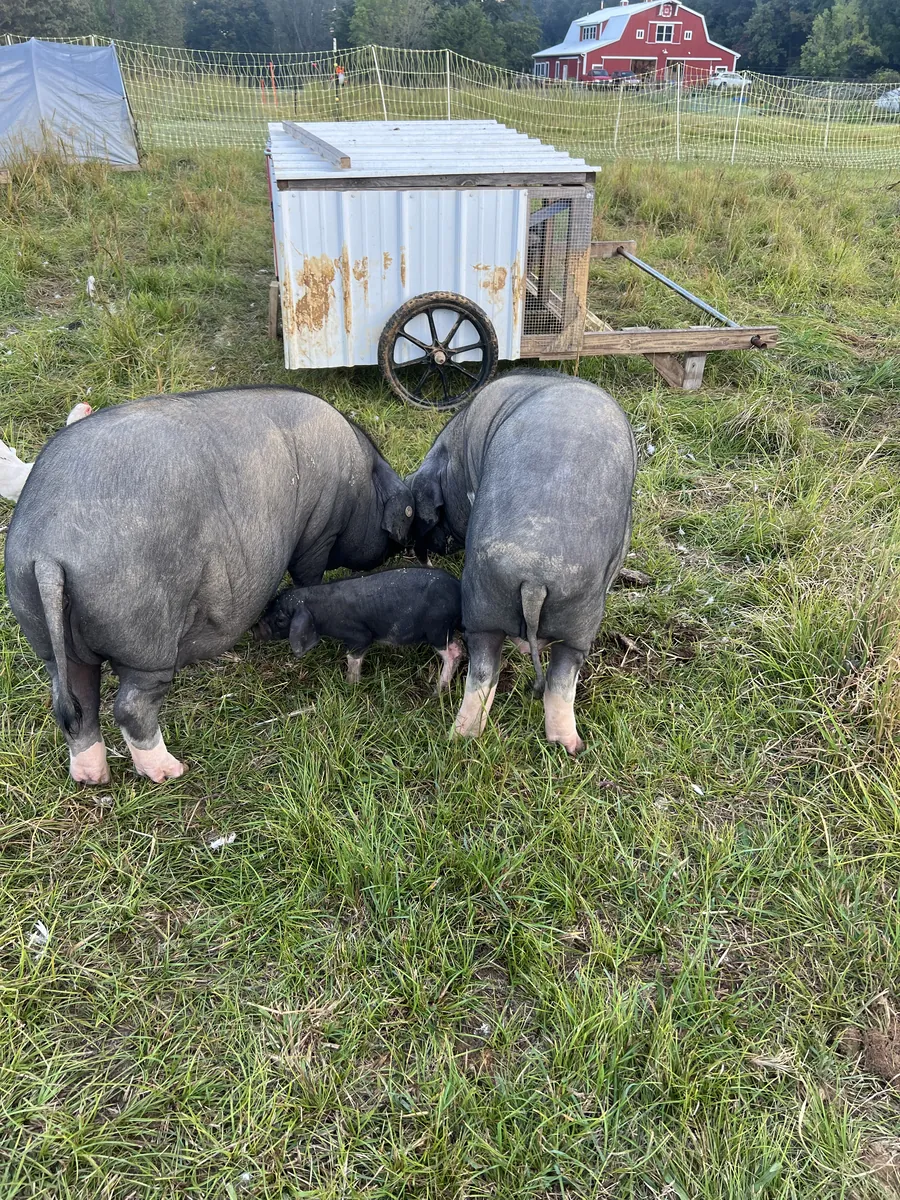
The plain answer
No growth hormones are approved for pigs, so none are used here. Antibiotics are reserved for an animal that needs treatment. Welfare comes before a marketing claim.
Do not take our word for it
Read the farm’s non-negotiables →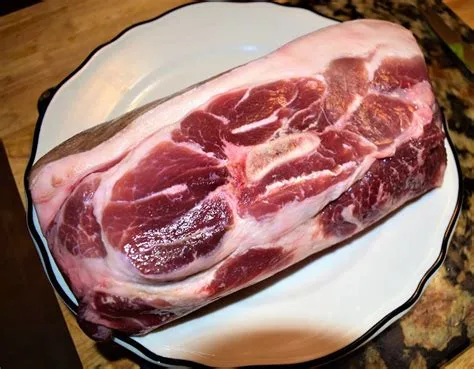
The plain answer
Yes. Two Meishans processed here in June 2026 weighed 362 and 338 pounds live and yielded 109 and 125 pounds packaged. Those are farm records, not a promise for another pig.
Do not take our word for it
Open the complete weights and costs →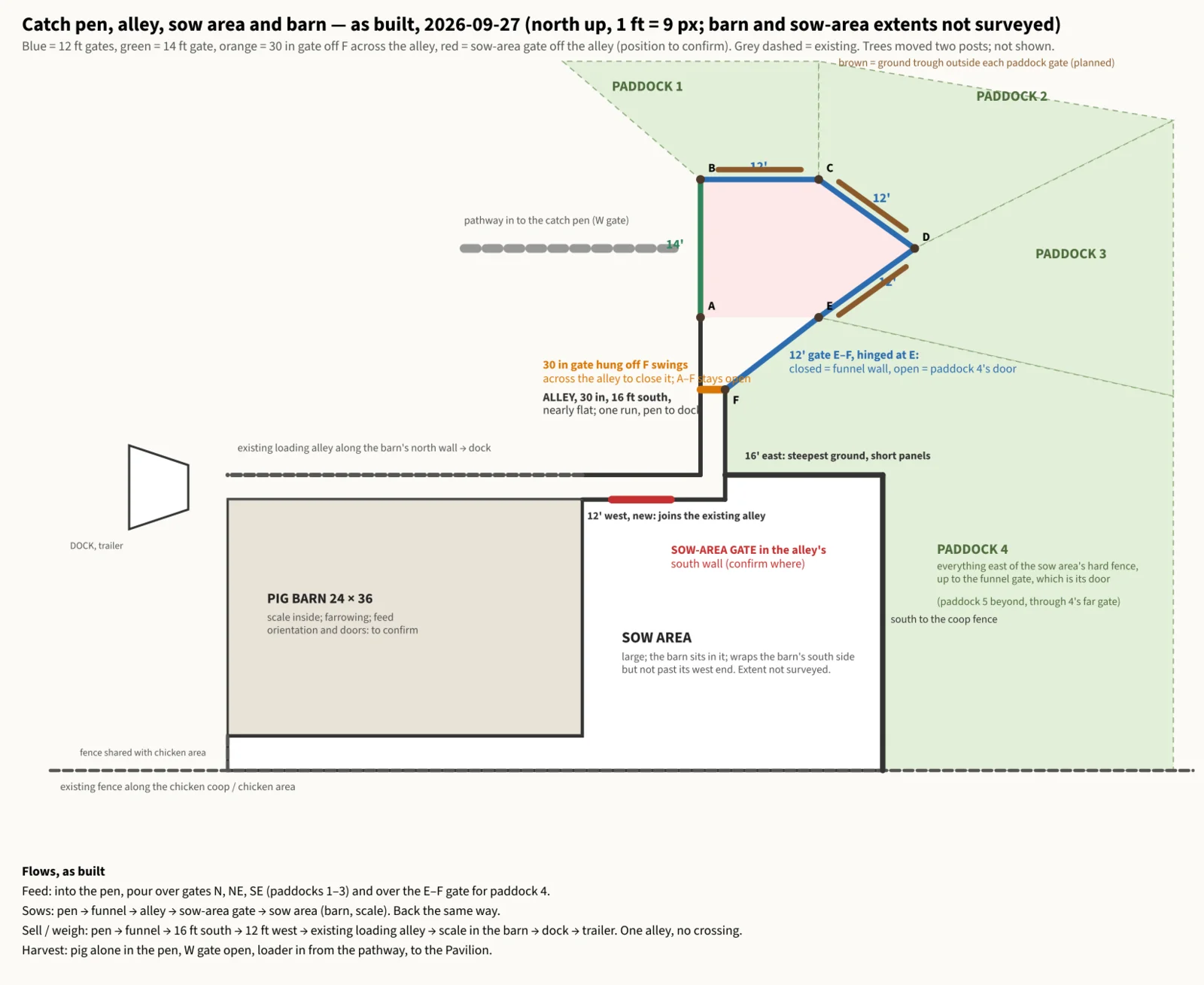
The plain answer
We document the miss, revise the design, and show the result. The pig handling hub took three plans before the gates, feeding path, scale, and trailer route worked together.
Do not take our word for it
Follow the sketches to the as-built pen →How the farm works
The pigs move through woodland paddocks, but food, handling, and loading meet at one central hub. Vacated ground rests before animals return.
This diagram explains the system. It is deliberately not a geographic map of the private farm.
See the sketches and as-built pen →01 · Live
Shade, forage, and fenced space. Groups move to fresh ground every two to three weeks.
02 · Gather
Feeding brings pigs to one familiar place. Gates connect groups, sorting, the scale, and the loading alley.
03 · Handle
The hub funnels toward the existing alley, scale, and trailer route instead of inventing another handling system.
04 · Rest
Used paddocks rest four to six weeks between groups so seeded forage and understory can return.
Stewardship rounds
A physician does not trust a plan merely because it was written. Neither should a farm. These are the four systems we repeatedly check against reality.
What we observe
Response
Treat an animal that needs care, adjust the setup, and involve a veterinarian when illness or deterioration exceeds ordinary husbandry support.
Current record
Daily observation informs action; treatment need overrides a marketing claim.
What we observe
Response
Move animals, extend rest, change stocking pressure, or repair the area rather than insisting a calendar is correct.
Current record
Groups generally move every two to three weeks; used paddocks rest four to six weeks.
What we observe
Response
Redesign the workflow, reduce scale, or delay expansion when the labor burden exceeds the family’s capacity.
Current record
The five-gate hub was built after the earlier feeding and movement routine stopped scaling.
What we observe
Response
Correct the site, publish the limitation, or stop making the claim when the record no longer supports it.
Current record
Availability has one canonical source; Journal receipts state claim, record, boundary, and responsible use.
The farm charter
Choose a chapter to see the people, preservation work, or non-negotiables behind Swift Spring Hollow.

Five generations · Four households
Five living generations share this land. Robert’s parents do much of the daily farm work. His daughter and son-in-law run the rabbit program. The children feed animals and collect eggs.
The decisions are made knowing the children will inherit them. The aim is not to get big. It is to leave the land better than the family found it.
Registry of Preservation
The Meishan and Silver Fox programs are different in scale, but joined by the same commitment: preserve animals with character, usefulness, temperament, and a place in resilient small-farm systems. In an industrial world that favors consistency over character, preserving rare lines is an act of care.
Heritage Pig
Heritage Rabbit
Non-negotiables
Our pigs live in fenced woodland paddocks and move to fresh ground every two to three weeks. Our hens range the farm.
The woods give the pigs shade and forage. Each paddock rests between groups so the understory can grow back.
Resting the ground and moving animals protects the soil, and the soil protects the water.
No growth hormones are approved for pigs, so none are used here. Antibiotics only when an animal needs treatment.
The journal records what our animals cost to raise, what they yielded, and what went wrong.
Supply stays limited because we raise animals carefully. When we run out, we keep a list.
Ordering
Message us for what is available now, or to get on the list for eggs and the 2027 CSA.
Message starter
Hi, I’m interested in ___. My question is ___.
Choose one method. You do not need to contact us in more than one place.
